G Ashik Jaman ★★★★★"Fantastic service from start to finish. They responded quickly explained the issue with my roof clearl..."G Paul Maher ★★★★★"Just had some roof works carried out by Up Top Roofing and would highly recommend them. The works incl..."G Melanie Woodall ★★★★★"Replaced a flat roof to the main house and felt garage roof. Great team. Honest evaluation of work nee..."G Keith Fernandes ★★★★★"Keiron and his team at Up Top Roofing were absolutely amazing! They came in to fix a roof that had bee..."G Lyn Hay ★★★★★"I can't thank enough Keiran, his team and ladies in the office for their patience. I must have been a..."G Bryan Dowdey ★★★★★"Up Top Roofing responded quickly to my request for a small flat lead roof to have the lead replaced wi..."G Sarah Moore ★★★★★"Brilliant...Up Top Roofing are an extremely professional & knowledgeable company. They have recently r..."
G Ashik Jaman ★★★★★"Fantastic service from start to finish. They responded quickly explained the issue with my roof clearl..."G Paul Maher ★★★★★"Just had some roof works carried out by Up Top Roofing and would highly recommend them. The works incl..."G Melanie Woodall ★★★★★"Replaced a flat roof to the main house and felt garage roof. Great team. Honest evaluation of work nee..."G Keith Fernandes ★★★★★"Keiron and his team at Up Top Roofing were absolutely amazing! They came in to fix a roof that had bee..."G Lyn Hay ★★★★★"I can't thank enough Keiran, his team and ladies in the office for their patience. I must have been a..."G Bryan Dowdey ★★★★★"Up Top Roofing responded quickly to my request for a small flat lead roof to have the lead replaced wi..."G Sarah Moore ★★★★★"Brilliant...Up Top Roofing are an extremely professional & knowledgeable company. They have recently r..."
G Ashik Jaman ★★★★★"Fantastic service from start to finish. They responded quickly explained the issue with my roof clearl..."G Paul Maher ★★★★★"Just had some roof works carried out by Up Top Roofing and would highly recommend them. The works incl..."G Melanie Woodall ★★★★★"Replaced a flat roof to the main house and felt garage roof. Great team. Honest evaluation of work nee..."G Keith Fernandes ★★★★★"Keiron and his team at Up Top Roofing were absolutely amazing! They came in to fix a roof that had bee..."G Lyn Hay ★★★★★"I can't thank enough Keiran, his team and ladies in the office for their patience. I must have been a..."G Bryan Dowdey ★★★★★"Up Top Roofing responded quickly to my request for a small flat lead roof to have the lead replaced wi..."G Sarah Moore ★★★★★"Brilliant...Up Top Roofing are an extremely professional & knowledgeable company. They have recently r..."
G Ashik Jaman ★★★★★"Fantastic service from start to finish. They responded quickly explained the issue with my roof clearl..."G Paul Maher ★★★★★"Just had some roof works carried out by Up Top Roofing and would highly recommend them. The works incl..."G Melanie Woodall ★★★★★"Replaced a flat roof to the main house and felt garage roof. Great team. Honest evaluation of work nee..."G Keith Fernandes ★★★★★"Keiron and his team at Up Top Roofing were absolutely amazing! They came in to fix a roof that had bee..."G Lyn Hay ★★★★★"I can't thank enough Keiran, his team and ladies in the office for their patience. I must have been a..."G Bryan Dowdey ★★★★★"Up Top Roofing responded quickly to my request for a small flat lead roof to have the lead replaced wi..."G Sarah Moore ★★★★★"Brilliant...Up Top Roofing are an extremely professional & knowledgeable company. They have recently r..."
How spray foam insulation is costing Dorset homeowners
Spray foam insulation can make a Dorset roof harder to inspect, restrict ventilation, hide leaks and create problems when selling or remortgaging. Here is what homeowners should check before paying for removal or roof repairs.
Up Top Roofing
Roofing specialists
14 January 2025
Original article
6 min read
1,102 words
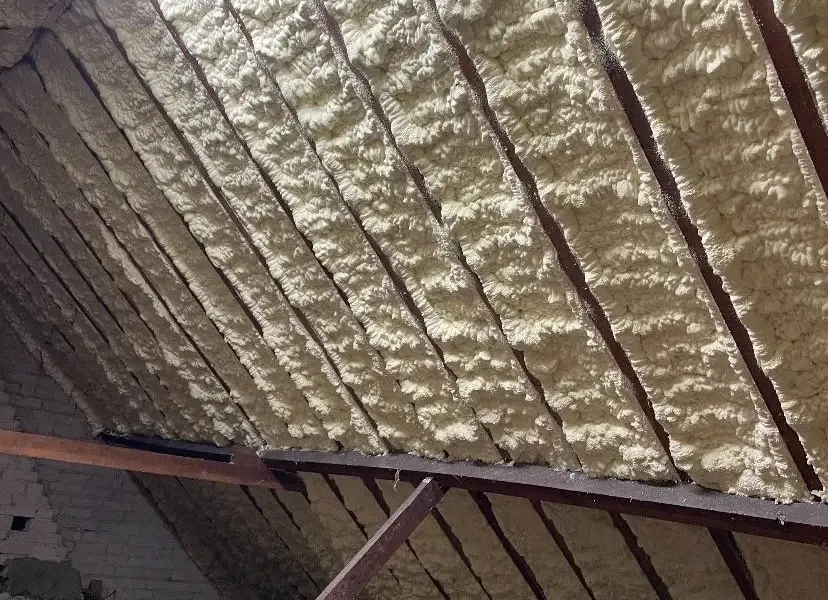
Spray foam insulation in roof spaces has become a real concern for homeowners across Bournemouth, Poole, Christchurch and wider Dorset. The problem is not simply that a property has insulation. The risk starts when spray foam has been applied to the underside of a pitched roof without the right design, documentation, ventilation and checks on the existing roof condition.
Key takeaway: if spray foam is hiding the roof timbers, sealing ventilation paths or sitting against tiles, felt or underlay, it can make roof defects harder to spot and may raise questions during a survey, sale or remortgage. Get the roof inspected before agreeing to expensive removal work.
Why spray foam can become a roof problem
Most traditional pitched roofs in Dorset were designed as ventilated roof spaces. Warm, moist air needs a route out of the loft so condensation does not build up around rafters, battens and underlay. When spray foam is added to the underside of the roof, it can change how that roof was designed to breathe.
In some homes, foam can also cover the very timbers a roofer or surveyor needs to inspect. That makes it harder to see leaks, timber decay, failed underlay, slipped tiles or previous repair work. A roof can look tidy from inside the loft while moisture is still trapped behind the foam.
RICS advises homeowners to treat spray foam as a serious alteration to the property, because it can affect roof maintenance, survey inspections and lender decisions. GOV.UK research into sprayed foam on timber sloped roofs also notes that moisture risk depends heavily on the roof build-up, underlay type, vapour control and whether the foam was applied directly to the roof covering.
What Dorset homeowners are usually worried about
When we are asked to look at a roof with spray foam, the homeowner is usually dealing with one of three problems: a survey has flagged the roof, a lender has asked for more information, or the homeowner has noticed damp, condensation or movement in the roof covering.
Hidden roof timbers: rafters and battens may be partly or fully covered, limiting a proper condition check.
Ventilation concerns: blocked airflow can increase condensation risk in a roof that was originally designed to stay ventilated.
Leaks are harder to trace: water can travel behind foam before staining ceilings or timbers.
Repairs become more difficult: replacing tiles, battens or underlay may take longer if foam is bonded to the roof structure.
Sale and remortgage delays: surveyors, valuers and lenders may ask for evidence, specialist reports or remedial work before proceeding.
Why surveyors and lenders can get cautious
A surveyor needs to assess the condition of the roof structure. If the foam prevents that inspection, they may not be able to give a clear view on timber condition, roof movement or moisture damage. That uncertainty is often what causes trouble with sales and remortgages.
This does not mean every home with spray foam is automatically unmortgageable. Policies vary, and the final decision sits with the lender, valuer and surveyor. However, missing documentation, poor access, visible moisture staining or foam applied directly to roof coverings can all make the process harder.
If you already have spray foam installed, gather as much paperwork as possible before a survey. Useful documents include the installation invoice, product details, open-cell or closed-cell specification, condensation risk assessment, ventilation details, photos taken before and during installation, guarantees, and any independent test certificate or approval documentation.
Do not rush into removal without an inspection
Spray foam removal can be disruptive and, if handled badly, may damage felt, battens, rafters or tiles. It is also an area where homeowners can be targeted by pressure-selling. Before paying for removal, it is sensible to understand what type of foam is present, where it has been applied, whether the roof is leaking, and what your lender or surveyor actually requires.
A proper roof inspection should separate urgent defects from paperwork or mortgage concerns. Sometimes the roof needs local repairs first. Sometimes removal is required so timbers can be seen. In other cases, the priority is better documentation and a clear condition report.
What Up Top Roofing checks during a spray foam roof inspection
Our role is to look at the roof as roofers, not to sell panic. We check what can be seen safely and explain the practical roofing implications in plain English.
Where the foam has been applied and whether it is bonded to underlay, tiles, slates or timbers.
Whether ventilation routes appear blocked or altered.
Signs of active leaks, staining, mould, condensation or timber softness.
Condition of visible rafters, battens, underlay, flashings and roof coverings.
Whether tiles or slates are lifting, moving or difficult to repair from outside.
What evidence can be photographed for the homeowner, surveyor or next contractor.
Where specialist testing or a formal valuation opinion is needed, we will say so. A roofer can assess roof condition and repair routes, but mortgage and valuation decisions should be confirmed with the surveyor, lender or an appropriately qualified independent specialist.
Safer next steps if your home has spray foam
If you are staying in the property, start with roof condition and moisture control. Keep the roof watertight, look for damp staining after heavy rain, check for condensation during colder weather and keep any installation paperwork together.
If you are selling or remortgaging, speak to your broker, lender or surveyor early. Ask what evidence they need before you commit to any removal quote. Clear photos, product paperwork and an independent roof inspection can reduce uncertainty and help you avoid paying for unnecessary work.
If you are considering insulation upgrades and have not yet installed spray foam, get independent advice first. For many standard lofts, improving ceiling-level insulation and ventilation may be simpler, cheaper and easier to maintain than changing the whole roof space into a warm roof.
When to get urgent roofing advice
Do not wait if you can see damp patches on ceilings, mould in the loft, sagging timbers, slipped tiles, daylight through the roof, persistent condensation or staining around foam-covered rafters. These signs need a roof inspection before they turn into larger repair costs.
For local help, contact Up Top Roofing for a clear roof assessment. We cover Bournemouth, Poole, Christchurch and wider Dorset, and we can advise whether your spray foam concern points to a roof repair, further specialist inspection or a more detailed replacement plan.