G Ashik Jaman ★★★★★"Fantastic service from start to finish. They responded quickly explained the issue with my roof clearl..."G Paul Maher ★★★★★"Just had some roof works carried out by Up Top Roofing and would highly recommend them. The works incl..."G Melanie Woodall ★★★★★"Replaced a flat roof to the main house and felt garage roof. Great team. Honest evaluation of work nee..."G Keith Fernandes ★★★★★"Keiron and his team at Up Top Roofing were absolutely amazing! They came in to fix a roof that had bee..."G Lyn Hay ★★★★★"I can't thank enough Keiran, his team and ladies in the office for their patience. I must have been a..."G Bryan Dowdey ★★★★★"Up Top Roofing responded quickly to my request for a small flat lead roof to have the lead replaced wi..."G Sarah Moore ★★★★★"Brilliant...Up Top Roofing are an extremely professional & knowledgeable company. They have recently r..."
G Ashik Jaman ★★★★★"Fantastic service from start to finish. They responded quickly explained the issue with my roof clearl..."G Paul Maher ★★★★★"Just had some roof works carried out by Up Top Roofing and would highly recommend them. The works incl..."G Melanie Woodall ★★★★★"Replaced a flat roof to the main house and felt garage roof. Great team. Honest evaluation of work nee..."G Keith Fernandes ★★★★★"Keiron and his team at Up Top Roofing were absolutely amazing! They came in to fix a roof that had bee..."G Lyn Hay ★★★★★"I can't thank enough Keiran, his team and ladies in the office for their patience. I must have been a..."G Bryan Dowdey ★★★★★"Up Top Roofing responded quickly to my request for a small flat lead roof to have the lead replaced wi..."G Sarah Moore ★★★★★"Brilliant...Up Top Roofing are an extremely professional & knowledgeable company. They have recently r..."
G Ashik Jaman ★★★★★"Fantastic service from start to finish. They responded quickly explained the issue with my roof clearl..."G Paul Maher ★★★★★"Just had some roof works carried out by Up Top Roofing and would highly recommend them. The works incl..."G Melanie Woodall ★★★★★"Replaced a flat roof to the main house and felt garage roof. Great team. Honest evaluation of work nee..."G Keith Fernandes ★★★★★"Keiron and his team at Up Top Roofing were absolutely amazing! They came in to fix a roof that had bee..."G Lyn Hay ★★★★★"I can't thank enough Keiran, his team and ladies in the office for their patience. I must have been a..."G Bryan Dowdey ★★★★★"Up Top Roofing responded quickly to my request for a small flat lead roof to have the lead replaced wi..."G Sarah Moore ★★★★★"Brilliant...Up Top Roofing are an extremely professional & knowledgeable company. They have recently r..."
G Ashik Jaman ★★★★★"Fantastic service from start to finish. They responded quickly explained the issue with my roof clearl..."G Paul Maher ★★★★★"Just had some roof works carried out by Up Top Roofing and would highly recommend them. The works incl..."G Melanie Woodall ★★★★★"Replaced a flat roof to the main house and felt garage roof. Great team. Honest evaluation of work nee..."G Keith Fernandes ★★★★★"Keiron and his team at Up Top Roofing were absolutely amazing! They came in to fix a roof that had bee..."G Lyn Hay ★★★★★"I can't thank enough Keiran, his team and ladies in the office for their patience. I must have been a..."G Bryan Dowdey ★★★★★"Up Top Roofing responded quickly to my request for a small flat lead roof to have the lead replaced wi..."G Sarah Moore ★★★★★"Brilliant...Up Top Roofing are an extremely professional & knowledgeable company. They have recently r..."
Complete Roof Replacement Guide UK 2026: Costs, Building Regs & Process
Complete Roof Replacement Guide UK 2026: Costs, Building Regs & Process A full roof replacement is one of the biggest jobs you will ever do on your home. Get it right and the roof system resets for 50 years or more. Get it wrong and you pay twice. This guide cuts through the noise. You'll [...]
Up Top Roofing
Roofing specialists
26 April 2026
Original article
10 min read
2,070 words
A full roof replacement is one of the biggest jobs you will ever do on your home. Get it right and the roof system resets for 50 years or more. Get it wrong and you pay twice.
This guide cuts through the noise. You’ll learn:
When replacement beats repair
What Building Regulations actually require in 2026
Realistic UK costs for tile, slate, EPDM and GRP
The exact step-by-step process on site
How to choose a contractor without getting burned
Written for homeowners across Dorset, Bournemouth, Poole, Christchurch and Wimborne by a team that has worked South Coast roofs for over 30 years.
Why a full roof replacement is sometimes the smartest option
Repairs buy time. Replacement resets the system.
The usual triggers for a full reroof:
Widespread leaks that keep coming back
Sagging or visible structural movement
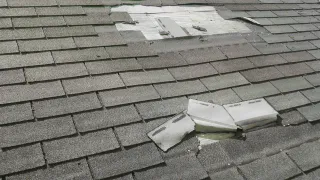
Cracked, slipping or missing tiles across multiple areas
Failed underlay (often diagnosed only after strip-off)
Deteriorated flashings around chimneys and abutments
Repeated storm damage on coastal properties
A roof that is simply at or beyond its service life
Once damage is widespread, patch repairs stop being cost-effective. A proper replacement lets the installer inspect the structure, replace degraded battens, upgrade insulation to current standards, correct flashings and detailing, and hand over a roof that meets modern Building Regulations.
Building Regulations, planning and compliance in 2026
This is where most homeowners get caught out. Skip this section and you risk an enforcement notice or a void warranty.
Building Regulations for reroofing in England
You will normally need Building Regulations approval if any of the following apply:
More than 50% of the roof covering is being replaced
More than 25% of the building envelope is affected
Structural changes are made (rafters, purlins, ridge beams)
The new covering materially changes fire performance
The new covering increases roof weight by 15% or more
In practice, most full roof replacements fall into this category. Approved Document L (2026 edition) requires existing roof thermal elements to hit a U-value target of 0.16 W/m²K when more than 50% is renovated.
Planning permission
Usually not required for a like-for-like reroof that does not materially change external appearance.
You will need consent if:
The property is listed
The property sits in a conservation area (common across rural Dorset and Wimborne)
An Article 4 direction applies
You’re changing roof shape, pitch, height or material type
Heritage homes need like-for-like material matching. A slate-to-concrete switch on a listed cottage is a fast route to enforcement action.
Wildlife and asbestos checks
Two pre-start traps:
Bats: All UK bat species and their roosts are fully protected by law. If there’s any sign of bat presence in the loft, the contractor must pause and route the case correctly through Natural England.
Asbestos: Common in pre-2000 properties, especially garage roofs, porches and outbuildings. Damaged asbestos cement can be notifiable non-licensed work under HSE rules.
Warranties and guarantees
For ordinary homeowner reroofs, focus on:
Workmanship guarantee (10 years is the benchmark)
Insurance-backed guarantee (covers you if the contractor goes under)
Building Regulations completion certificate (Building Control or competent person scheme)
Up Top Roofing provides a 10 Year Insurance Backed Guarantee on all new roof installations as standard.
NHBC Buildmark is a separate product. It only matters if your home is still inside a live new-build warranty period.
Roof replacement costs in 2026
UK roofing prices vary because guides treat insulation, scaffolding and VAT inconsistently. Treat the numbers below as a planning budget, not a quote.
Indicative cost ranges by roof type
Roof type
Installed range (per m²)
Best use case
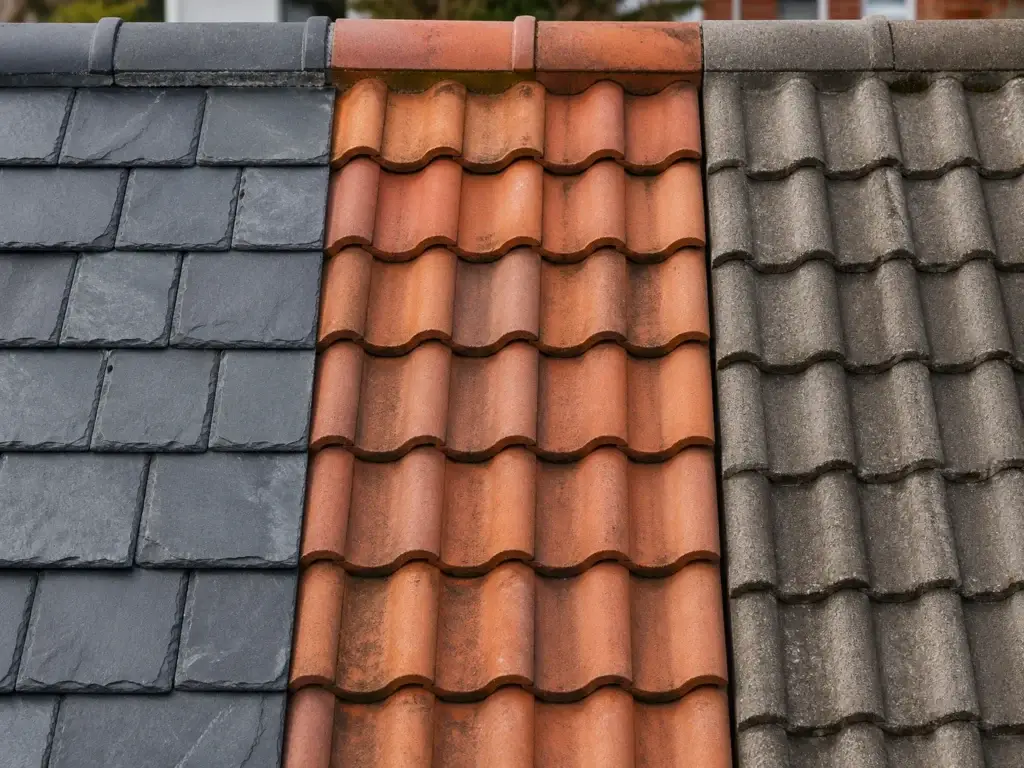
Concrete tile (pitched)
£120 to £230
Standard UK family homes
Clay tile (pitched)
£160 to £275
Period homes, traditional Dorset stock
Natural slate (pitched)
£160 to £275+
Heritage homes, conservation areas
Metal roofing
£70 to £160
Modern designs, outbuildings, low-maintenance
EPDM flat roof
£80 to £160
Extensions, garages, dormers, porches
GRP flat roof
£120 to £180
Flat roofs with complex detailing
For a standard three-bedroom semi with a 65 m² roof:
Concrete tile: roughly £10,000 to £15,000 (labour, scaffold and insulation included)
Welsh slate: roughly £18,000+
EPDM flat roof on a single-storey extension: £3,000 to £6,000
What moves your quote up or down
Scaffolding: A six-week semi-detached wrap can run £2,000 to £3,000.
Waste disposal: Around £300 per skip. Asbestos disposal is separate and notifiably more expensive.
Structural repairs: Often only visible after strip-off. Decent quotes flag this as a provisional item.
VAT: HMRC treats new insulated roofs as one job at standard 20% VAT. Insulation upgrades do not unlock the reduced rate on a full reroof.
Up Top Roofing owns its own scaffolding company. That means no third-party coordination delays and one point of contact for the whole project.
What happens during a roof replacement: step-by-step
A competent reroof follows the same sequence every time. Variations come from roof type and hidden defects, not process.
1. Inspection and quotation
The roofer surveys the property, checks visible condition, identifies access constraints, flags bat or asbestos risk, and discusses material options. You should receive a written, itemised quote with everything broken out.
2. Scaffold and site protection
Scaffold goes up first. Edge protection, safe access points, ground sheets to protect paths, gardens, conservatories and cars. HSE rules treat all roof work as high-risk. Skip this stage and you’re looking at injury claims.
3. Strip the old covering
Tiles, slates or membranes come off. Battens and underlay are stripped where required. This is when hidden defects appear: rotten battens, torn underlay, decayed valleys, defective chimney flashings, localised timber rot.
4. Structural checks and repairs
Rafters, hips, valleys, ridge lines and supporting timber inspected. If the new covering is heavier or lighter than the old, structural adequacy gets re-checked. Rotten timbers replaced before anything else goes back on.
5. Underlay, insulation and ventilation
New breathable membrane installed. Insulation upgraded where Approved Document L requires it. Ventilation strategy confirmed (a warmer roof without proper airflow creates condensation problems that look like leaks).
6. Battens and main covering
New treated battens fixed at correct gauge for your tile or slate. Coverings laid, fixed and finished. For flat roofs, this is the EPDM or GRP membrane stage. For flat roofs, the repair-or-replace decision depends on the deck condition, drainage, ponding water, membrane age and previous repair history. Our flat roof repair vs replacement guide explains this decision in more detail.
7. Flashings, gutters and roofline
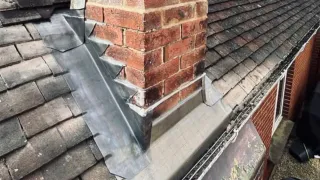
Lead flashings installed at chimneys, abutments and valleys. This is where most leaks start on poorly-finished jobs. Our lead work specialists handle every chimney, valley and pitched abutment in-house.
8. Snagging, clearance and handover
Site cleared. Final inspection. Photos. Guarantee paperwork. Building Regulations certification.
Typical timeline
Roof type
Typical duration
Standard pitched (semi-detached)
3 to 7 working days
Flat roof (extension or garage)
2 to 4 days
Complex slate or large detached
1 to 3 weeks
Weather, hidden defects and access drive the schedule. Coastal Dorset properties regularly lose a day or two to wind and rain in autumn and winter.
Common problems and how we troubleshoot them
The four risks every honest roofer flags upfront:
Hidden timber decay behind battens. Provisional sum on the quote, agreed rate per metre for replacement, photos before any work proceeds.
Condensation after insulation upgrades. Solved with correct ventilation strategy at design stage, not retrofitted later.
Weather delays. Coastal Dorset and Bournemouth see annual rainfall around 877mm with wetter autumn and winter. Temporary weatherproofing must be in place every night the roof is open.
Bats, asbestos or heritage constraints discovered late. Pause, document, route correctly. Never improvise.
Roof lifespan and maintenance
How long should your new roof actually last?
Material
Expected lifespan
Concrete tile
60+ years
Clay tile
60 to 80+ years
Spanish natural slate
75 to 100 years
Welsh slate
100+ years
Metal roofing
40 to 70 years
GRP flat roof
25 to 30 years
EPDM flat roof
50+ years
Maintenance that actually extends roof life
Twice-yearly checks (autumn and spring)
Visual inspection after major storms
Clear gutters, valleys and downpipes
Address minor flashing damage before it spreads
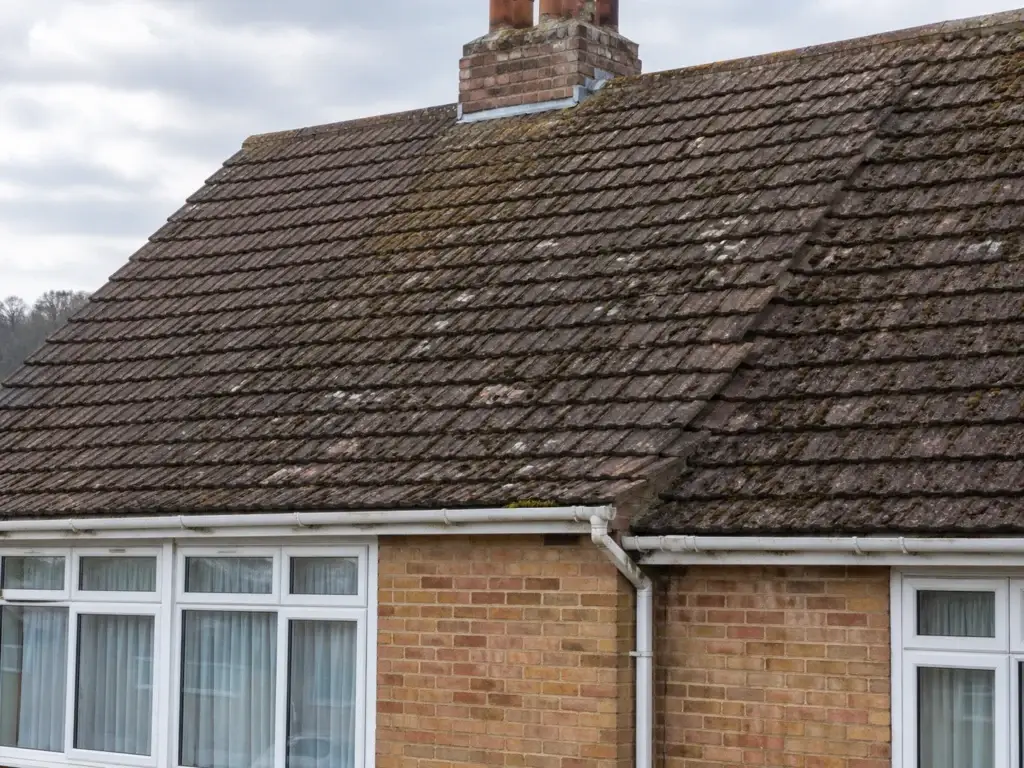
Treat moss and algae every 1 to 2 years on shaded north-facing slopes
A new roof is not a fit-and-forget purchase. It’s a long-life system that performs best when kept clear, ventilated and watertight.
Do I need Building Regulations approval to replace my roof?
In most cases yes. England rules require approval if more than 50% of the roof is replaced, more than 25% of the building envelope is affected, structural changes are made, or fire performance or roof weight changes materially.
How much does a roof replacement cost in the UK in 2026?
Most domestic roof replacements fall between £120 and £275 per square metre installed. A standard 65 m² semi-detached roof typically costs £10,000 to £15,000 with concrete tiles, rising to £18,000+ with Welsh slate. Flat roofs and simple metal systems sit lower.
Do I need planning permission to replace my roof?
Usually no, if the new roof does not materially change external appearance. Listed buildings, conservation areas and Article 4 directions are the main exceptions.
How long does a roof replacement take?
Typical pitched roof: 3 to 7 working days. Flat roof: 2 to 4 days. Complex slate or large detached: 1 to 3 weeks.
Is insulation upgrade VAT-reduced?
No. HMRC treats a new insulated roof as one job charged at standard 20% VAT. The reduced rate does not apply to a full reroof.
What guarantee should I expect?
Minimum 10-year workmanship guarantee, ideally insurance-backed. Up Top Roofing provides a 10 Year Insurance Backed Guarantee on all new roof installations.
Ready for a free roof survey?
If your roof is leaking repeatedly, has reached the end of its usable life, or you’re comparing major repair against full replacement, the next step is a site survey, not guesswork.
Book a free roof survey with Up Top Roofing. We’ll inspect the roof, explain whether repair still makes financial sense, outline any Building Regulations issues, and give you a written quote with clear options for tile, slate, EPDM or GRP.